| Model: | HSE200 |
|---|---|
| Function: | 1.Deep silicon etching using Bosch or non-Bosch processes; 2.TSV (Through-Silicon Via) deep silicon etching; 3.Surface silicon structure etching for SOI wafers. |
| Engineer: | Liu / +86-21- 34206126-6013 / minliu@1 |
| Location: | East Area – Thin Film IV |
| Equipment ID: | EFM4DSE01 |
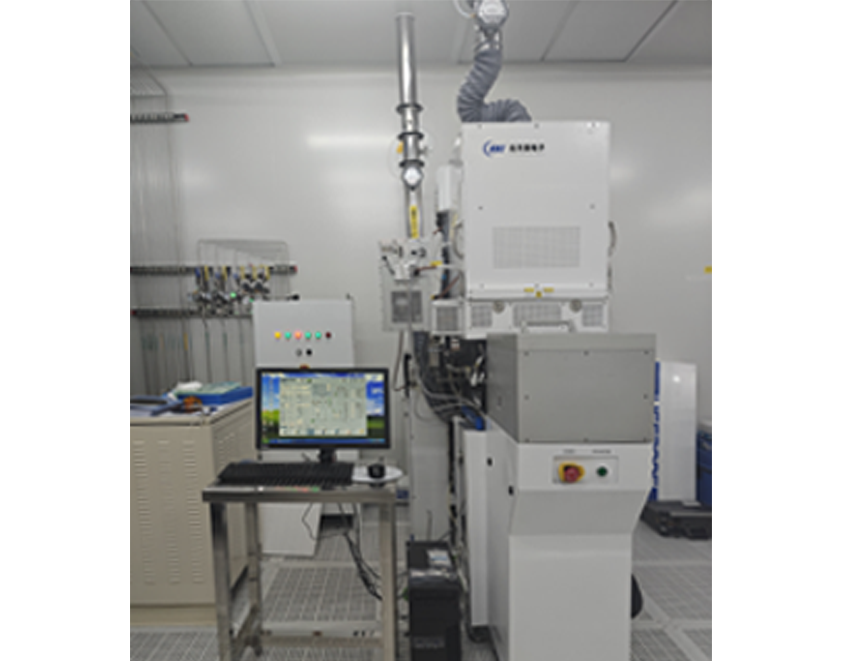
This system is primarily used for deep silicon etching and supports both Bosch and non-Bosch processes, enabling a wide range of applications.
The tool is equipped with advanced fast-response hardware and optimized software process control specifically designed for Bosch cyclic processes. Combined with advanced process technologies, it delivers excellent performance for high-aspect-ratio etching, meeting diverse process requirements.
Process / Testing Capabilities
Maximum etch rate: ~6 μm/min. Selectivity to photoresist: up to 50:1. Aspect ratio: >30:1. Sidewall roughness: <150 nm.
Technical Specifications
Designed for 6-inch wafers, compatible with 4-inch, 3-inch wafers and irregular silicon samples. Supports processing of diced pieces (with wafer mounting). Can also be used for glass substrates such as SOG (Spin-On Glass).
This process, originally proposed by Robert Bosch, enables deep silicon etching with high aspect ratios and vertical sidewalls.

Address: 800 Dongchuan Road, Minhang District, Shanghai 200240, China
Tel: +86 21 3420 7734
Email: [email protected]